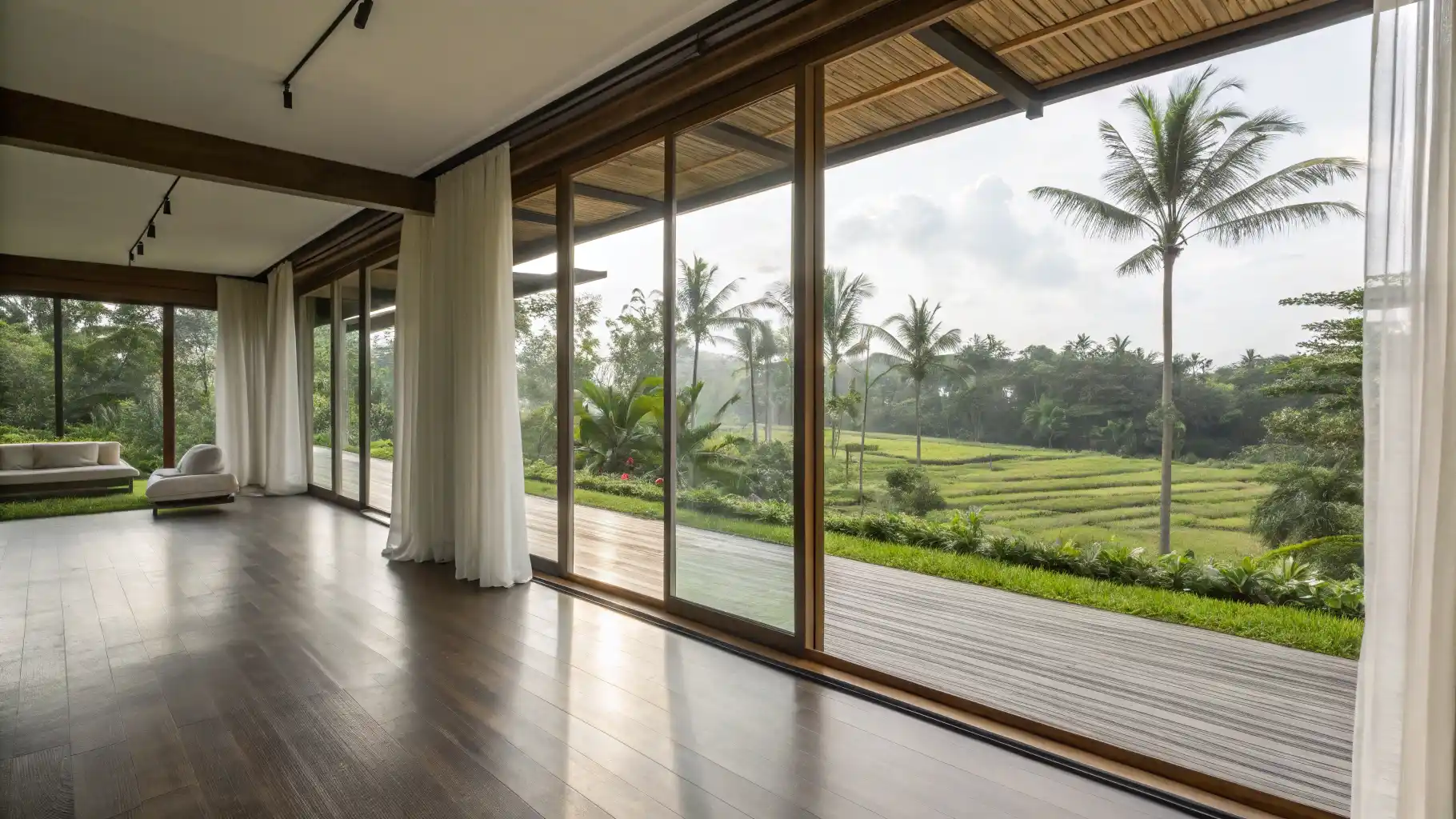
How ownership structure, location and management combine to drive long-term capital growth.
Capital growth in Bali’s villa market is the product of several compounding factors — land scarcity in prime districts, sustained tourism demand, and the quality of a villa’s design and management. Understanding how each factor contributes helps set a realistic expectation for long-term appreciation.
7–15%
Annual Capital Appreciation
For well-located villas, with some emerging areas reporting up to 20% during strong cycles.
15–20%
Off-Plan Value Gain
From purchase to completion, attributed to construction margin and market appreciation.
12–18%
Gross Rental Yield
The income component that complements capital growth.
5–7 yrs
Typical Break-Even
When professionally managed in a high-demand district.
Capital growth is only realisable if the underlying ownership structure is sound. Foreign investors typically hold Bali villas through leasehold, Hak Pakai, or a PT PMA company, and the choice affects both how appreciation is captured and how easily a property can later be sold or transferred.
While this page focuses on capital growth, income still matters — villas targeting 12–18% gross rental yields typically reach break-even within 5–7 years, after which appreciation compounds on an asset that is already cash-flow positive.
Well-located villas have appreciated 7–15% annually in recent cycles, and off-plan purchases are often marketed with 15–20% value gains from purchase to completion as construction margin and market demand combine.
Appreciation has historically been strongest in districts where available land is shrinking fastest — Canggu and parts of Uluwatu in particular — while Seminyak’s more built-out market tends to offer steadier, if less dramatic, growth.
Appreciation is only meaningful if title is clean and transferable. Verifying land certificates, zoning and permits with a licensed notary before purchase protects the capital-growth thesis just as much as it protects day-one ownership.
Professional management does double duty for capital growth: it protects the physical condition of the asset through regular maintenance, and it produces the income track record that makes a villa more attractive — and more valuable — to a future buyer.
Continued tourism growth and land scarcity in Bali’s core districts support the case for ongoing appreciation, though investors should plan for the possibility of regulatory or tax changes affecting foreign-held structures over time.
A disciplined process — legal consultation first, then location and villa selection, then a management plan — consistently outperforms an opportunistic purchase driven by a single attractive listing.
Financing remains limited for foreign buyers, so most capital-growth strategies are funded through personal capital or partnership structures with Indonesian entities, budgeted alongside legal and notary costs from the outset.
We can walk you through which districts have shown the strongest appreciation and why.
Operated by Bali Premium Trip · the same desk across our Bali network