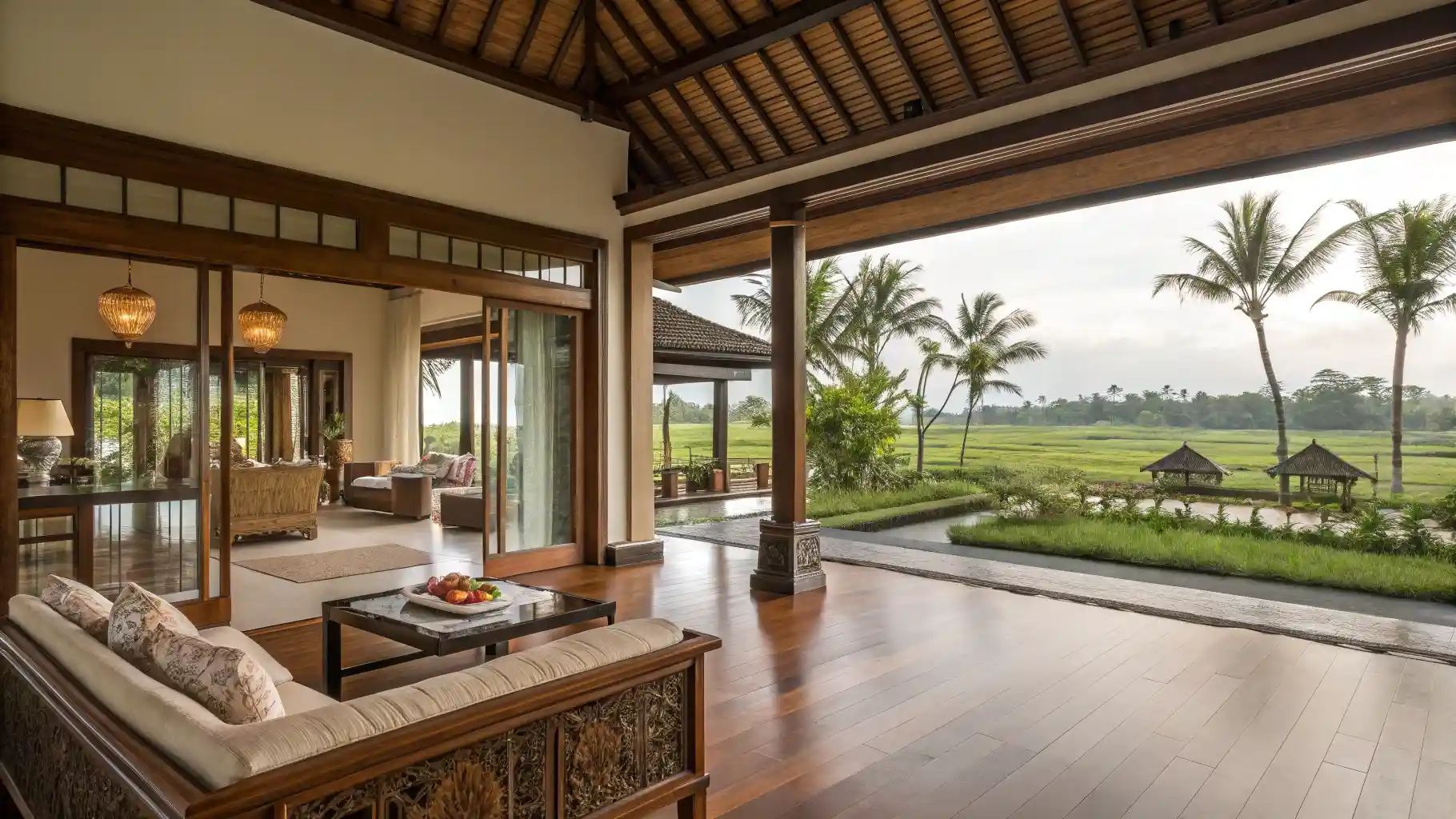
Exploring freehold-equivalent villa ownership for foreign and Indonesian investors across Canggu, Seminyak, Uluwatu, Bingin and Ubud.
Bali’s freehold villa market draws investors with the promise of strong rental yields and a genuine lifestyle upgrade. Because direct freehold (Hak Milik) title is reserved for Indonesian citizens, most listings foreigners consider are structured as leasehold, Hak Pakai or PT PMA-held property — and understanding that distinction before you shortlist a villa is the single most important step in the process.
12–18%
Gross Rental Yield
Achievable in prime locations such as Canggu, Seminyak and Uluwatu.
7–15%
Annual Capital Appreciation
With emerging areas occasionally reporting up to 20% during strong cycles.
80–85%
Occupancy Rate
For well-marketed and professionally managed villas.
25–30 yrs
Typical Leasehold Term
The standard structure most foreign buyers use, often extendable.
Freehold (Hak Milik) title in Indonesia is reserved for Indonesian citizens and qualifying legal entities, so foreign buyers exploring villas for sale typically proceed through leasehold (Hak Sewa), right-to-use (Hak Pakai), or a foreign-owned PT PMA company. Each route carries a different balance of control, duration and cost, and the right choice depends on whether the villa is intended as a personal residence, a rental asset, or both.
Villas listed in Canggu, Seminyak and Uluwatu commonly target gross rental yields of 12–18%, well above the roughly 5% global average for residential property. Capital appreciation adds a second layer of return, with well-located villas commonly appreciating 7–15% a year as land in these districts becomes scarcer.
Every listing should be checked against its underlying land certificate, zoning classification and building permits before any deposit changes hands. A licensed local notary (PPAT) and an independent property lawyer are the two professionals who protect a buyer’s position — nominee arrangements that promise informal freehold access are not a substitute and carry real legal risk.
Canggu remains the market’s most land-scarce district thanks to its surf-and-lifestyle appeal; Seminyak offers mature shopping and dining infrastructure with dependable occupancy; Uluwatu and Bingin command premium rates for cliffside and ocean-view design; and Ubud continues to attract long-stay, wellness-oriented tenants inland.
A professional management company handles marketing, bookings, guest services and maintenance in exchange for a percentage of gross revenue — and the quality of that management is often what separates a villa earning the low end of the 12–18% yield band from one earning the high end.
Financing options for foreign buyers are limited compared to domestic markets; most acquisitions are funded through personal capital, with legal, notary and due-diligence fees budgeted alongside the purchase price itself. Leasehold structures generally involve a simpler acquisition process than a PT PMA setup, which requires company incorporation before any property can be held.
Beyond the headline yield figures, the strength of a villa investment depends on tourism demand trends, the specific micro-location within a district, and how a property is positioned online. Working with an agency that tracks these dynamics closely can materially change the outcome of an otherwise identical purchase.
Solar power, rainwater harvesting and passive cooling design are increasingly common in new-build villas, both to manage operating costs and to appeal to an environmentally conscious guest base. Sustainable features are also becoming a differentiator agencies use to justify premium nightly rates.
Villa ownership in Bali sits within a living community structure — banjar (local neighbourhood) contributions, temple ceremonies and local customs all shape day-to-day operations. Buyers who engage respectfully with these norms, often through their property manager, tend to have smoother, longer-term relationships with their surrounding community.
Indonesia’s foreign-ownership rules and tax settings can shift over time, so any investment thesis should be stress-tested against regulatory change, not just current yields. Staying close to a specialist agency and legal advisor is the most reliable way to adapt an existing villa holding as the market evolves.
Tell us your budget and preferred district and we will share current freehold-equivalent listings that match.
Operated by Bali Premium Trip · the same desk across our Bali network